Featured (2026)
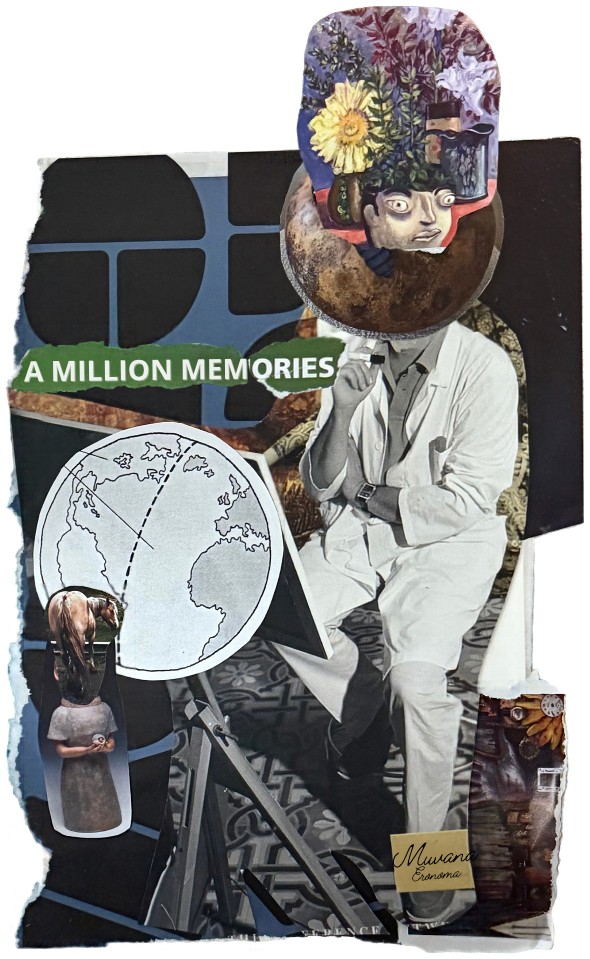
Brain in a Vase
How is AI reshaping the way people think and act?
This is an improvised collage, made in ten minutes from torn magazine pages. A figure in a white coat sits chin in hand, contemplating the Earth. With AI, everyone seems to hold a superpower, each a would-be changemaker redrawing the map.
Yet his head has been swapped for a vase of flowers. When machines think so much faster than we do, an existential crisis creeps in: if everything can be simulated with data, is the human mind anything more than the brain in a vat, a million memories rearranged?
In the lower corner, a much smaller figure has a horse’s head. As entry-level jobs vanish, the people AI displaces are pushed out of frame, many of them reduced to beasts of burden. Kafka’s Gregor wakes as an insect but keeps a human mind; these workers keep their bodies while the work wears their humanity away.
Photography (2023–2026)
Visual Art (2018–2026)
How is AI reshaping the way people think and act?This is an improvised collage, made in ten minutes from torn magazine pages. A figure in a white coat sits chin in hand, contemplating the Earth. With AI, everyone seems to hold a superpower, each a would-be changemaker redrawing the map.
Yet his head has been swapped for a vase of flowers. When machines think so much faster than we do, an existential crisis creeps in: if everything can be simulated with data, is the human mind anything more than the brain in a vat, a million memories rearranged?
In the lower corner, a much smaller figure has a horse’s head. As entry-level jobs vanish, the people AI displaces are pushed out of frame, many of them reduced to beasts of burden. Kafka’s Gregor wakes as an insect but keeps a human mind; these workers keep their bodies while the work wears their humanity away.
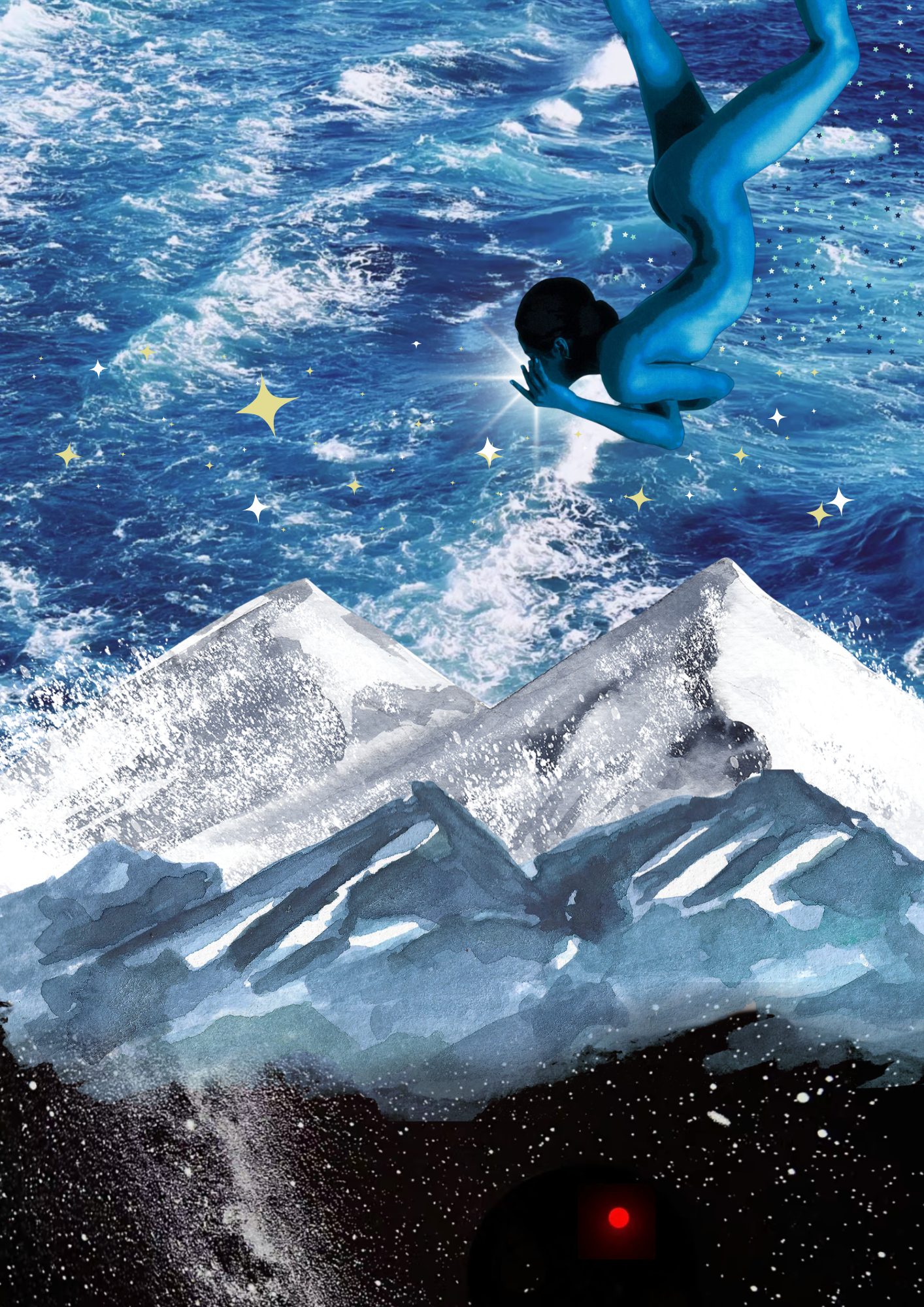 A diver falls through sea and sky toward a mountain that is also an ocean—a collage on scale and belonging.
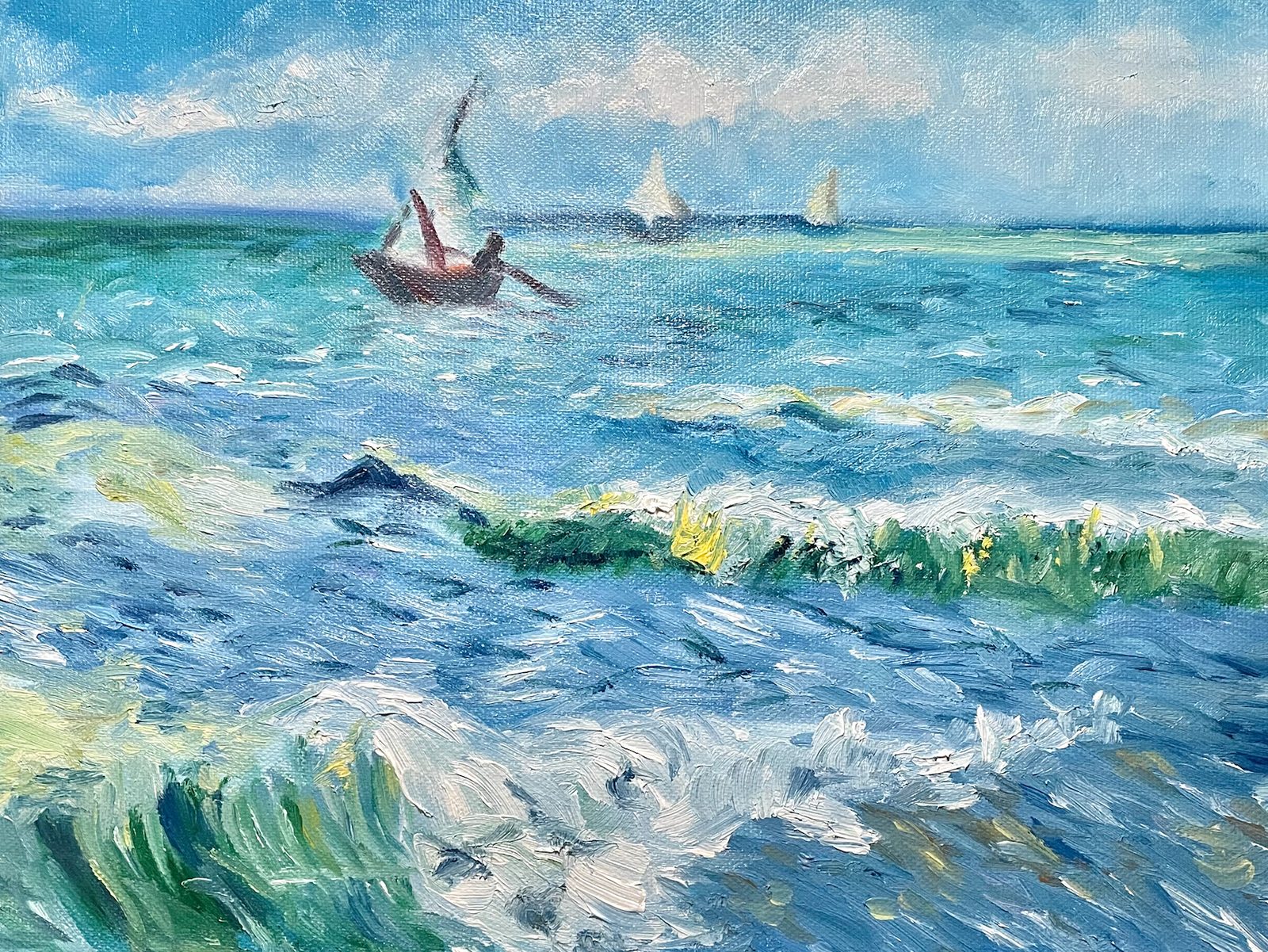 A study after Van Gogh’s 1888 seascape—short, restless strokes chasing the movement of open water.
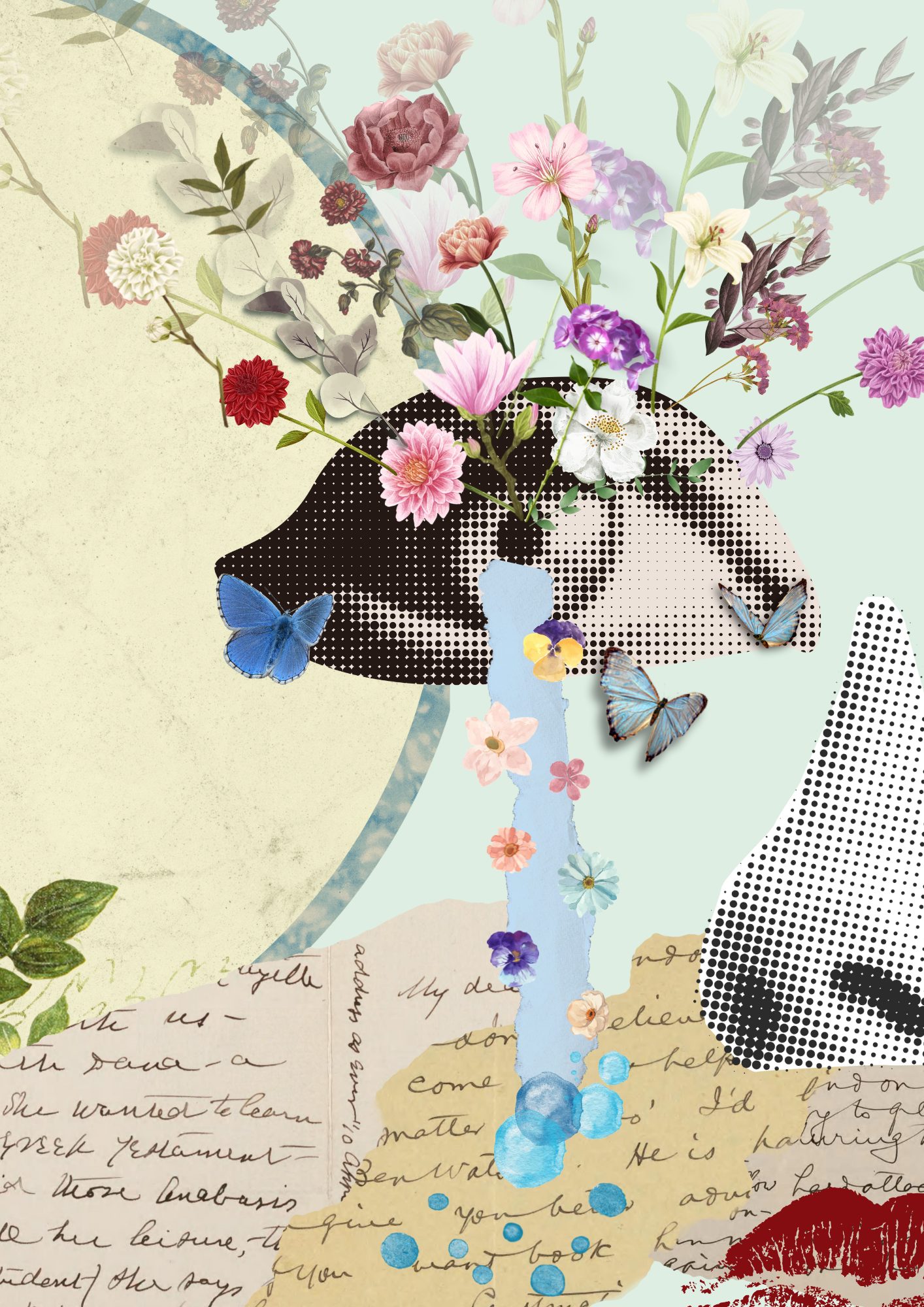 Botanical prints, halftone dots, and old letters grow out of a mushroom form; nature spliced with print culture.
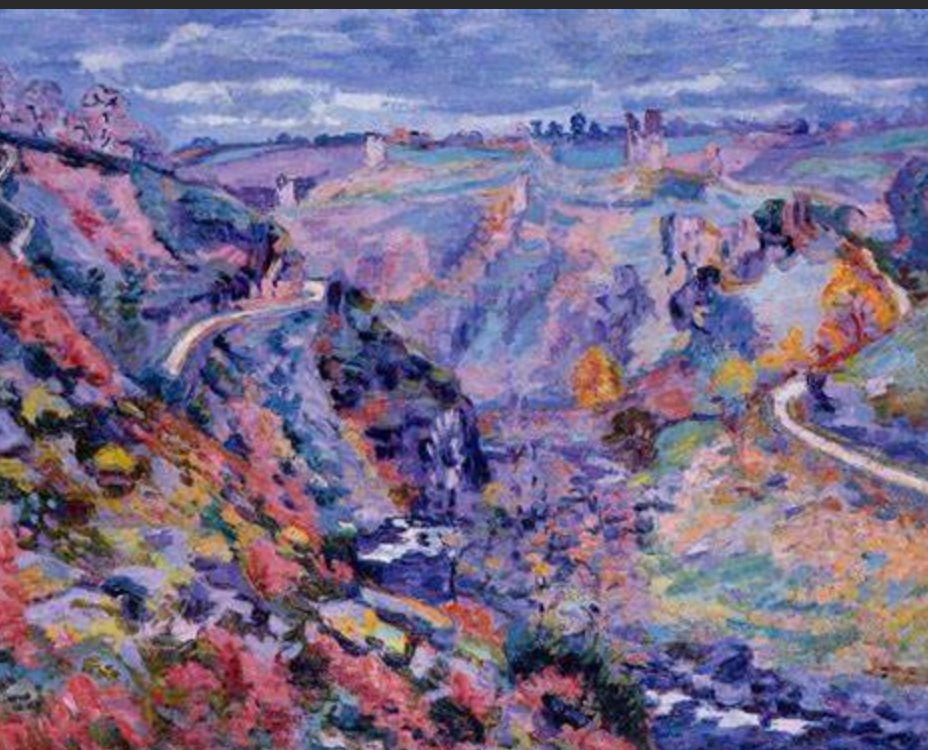 A digital reworking of Guillaumin’s fauvist valley—pushing the pinks and violets further than the original dares.
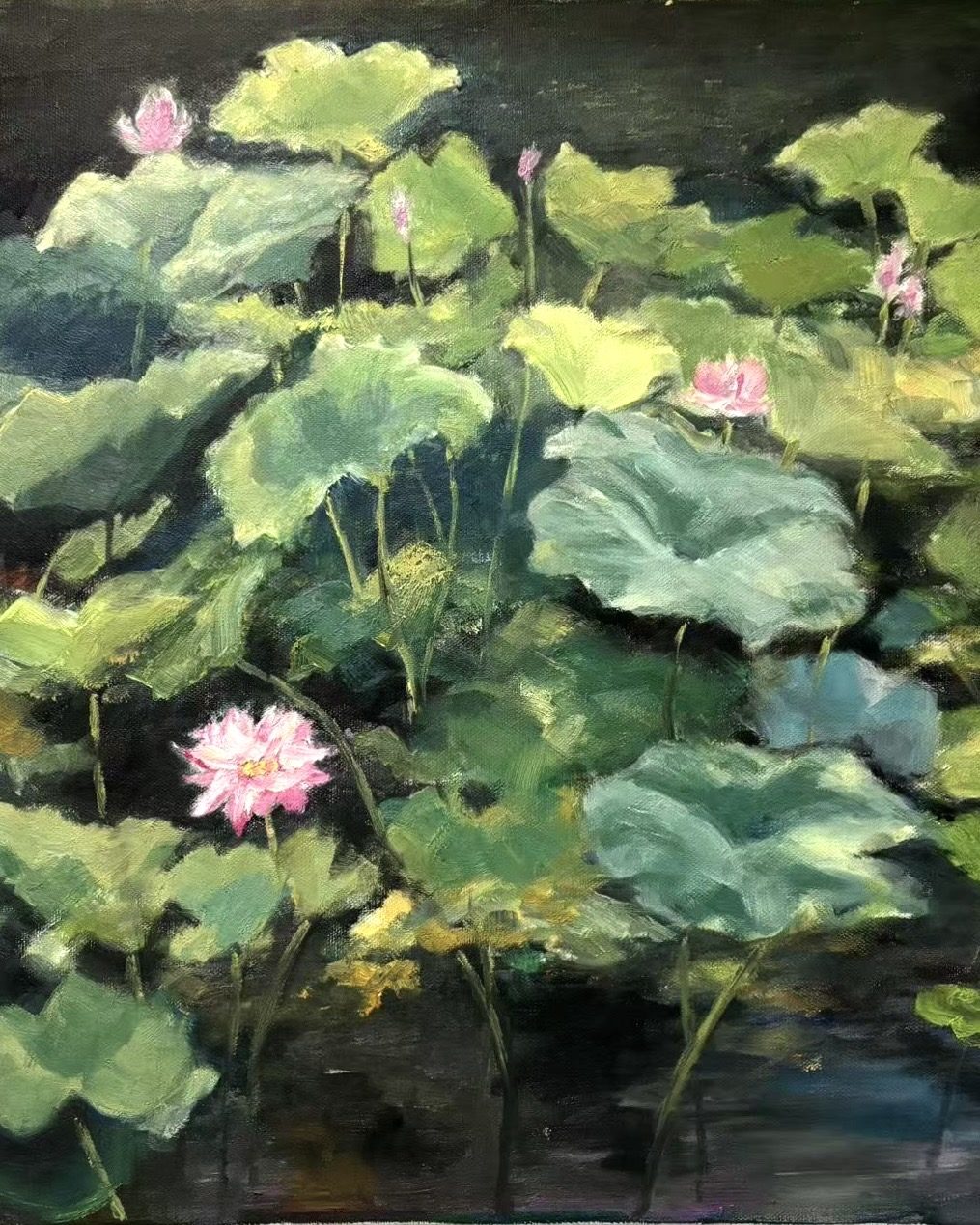 Lotus leaves and blossoms emerging from a dark pond; painted from life, greens layered wet into wet.
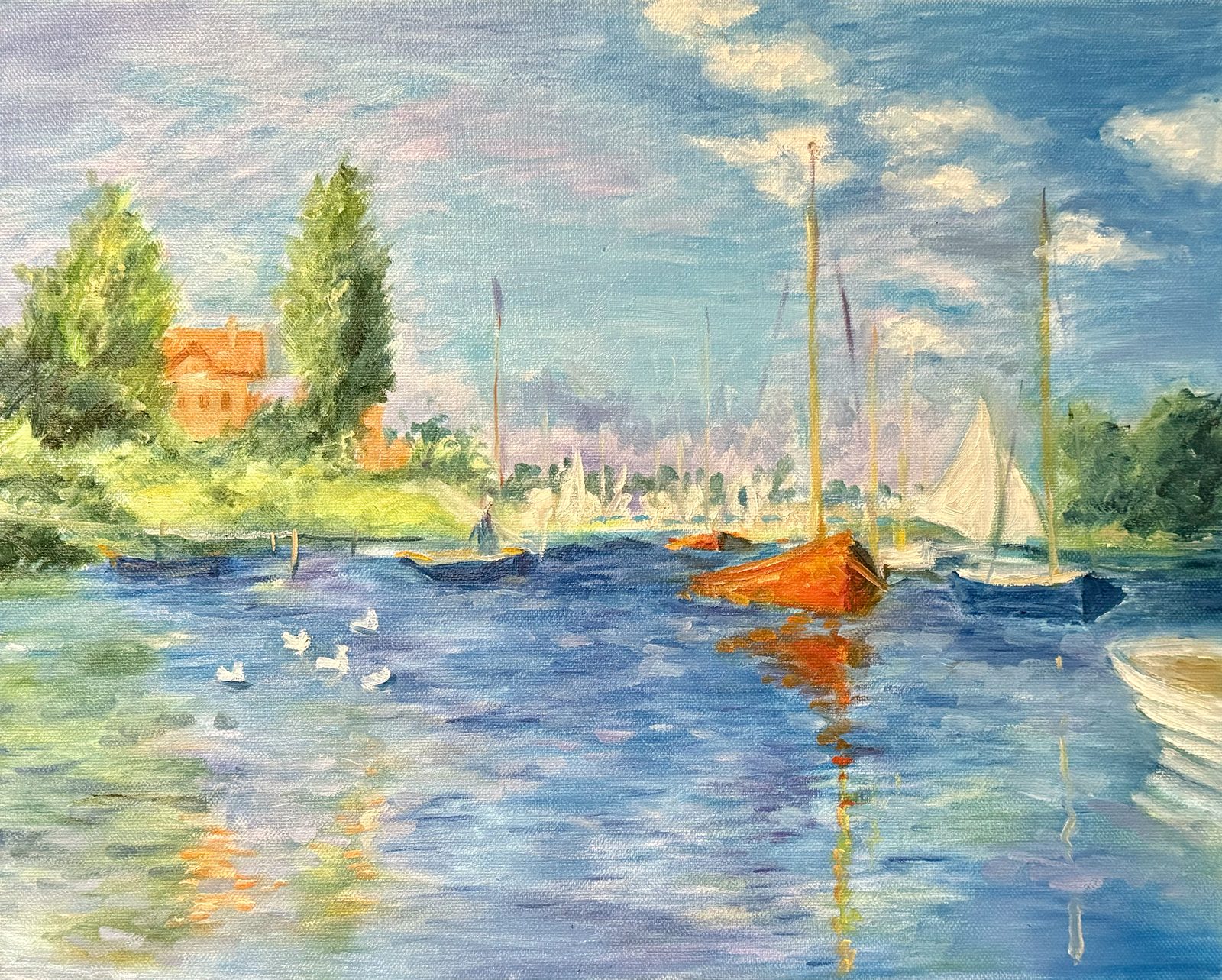 After Monet’s 1875 riverbank—moored boats and their broken reflections on a bright, wind-ruffled Seine.
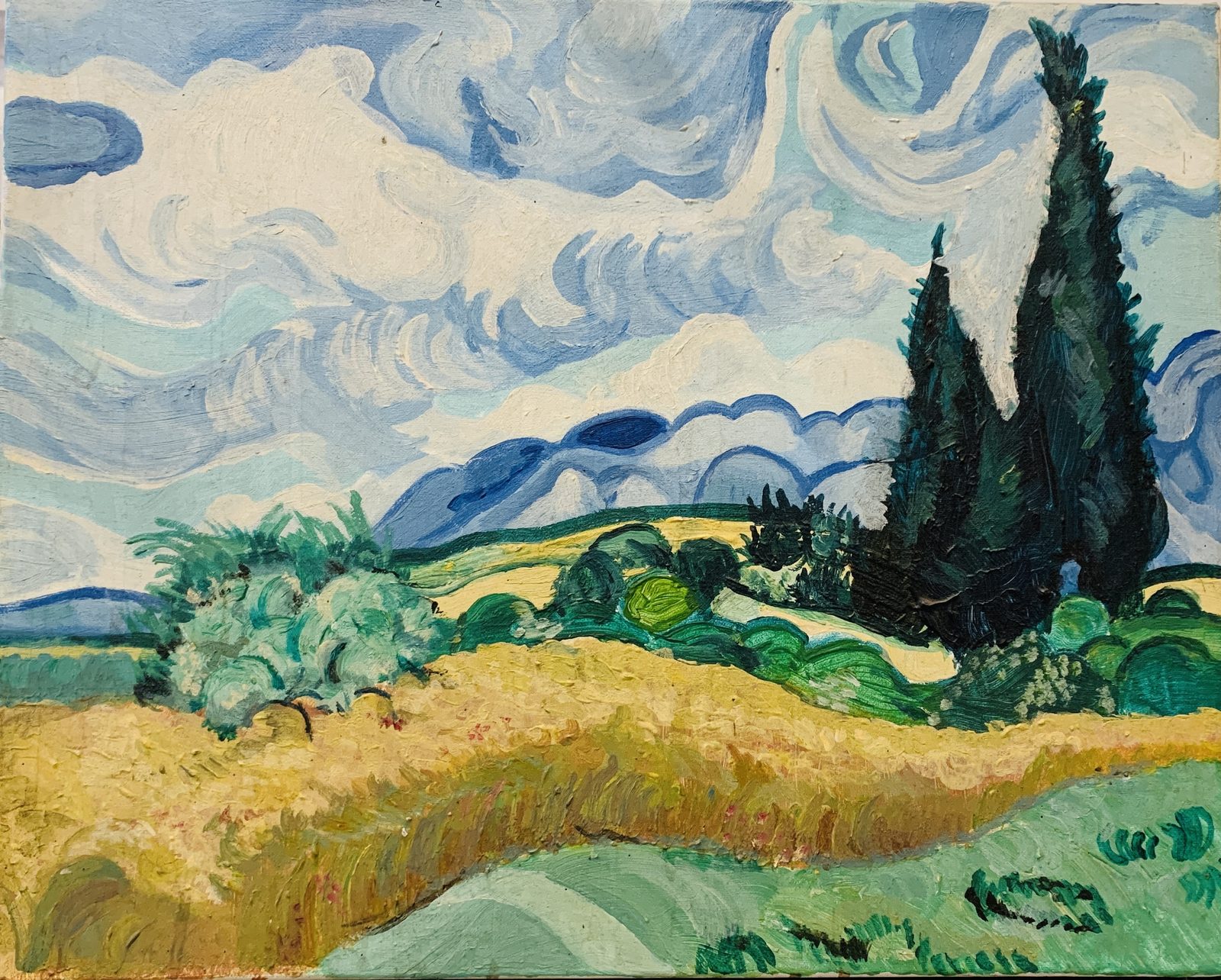 An early study after Van Gogh—swirling cloud and cypress, the whole field caught mid-gust.